How to Replace a Chemical Pump for Ferric Chloride Service
A case study in chemical compatibility engineering
The Problem
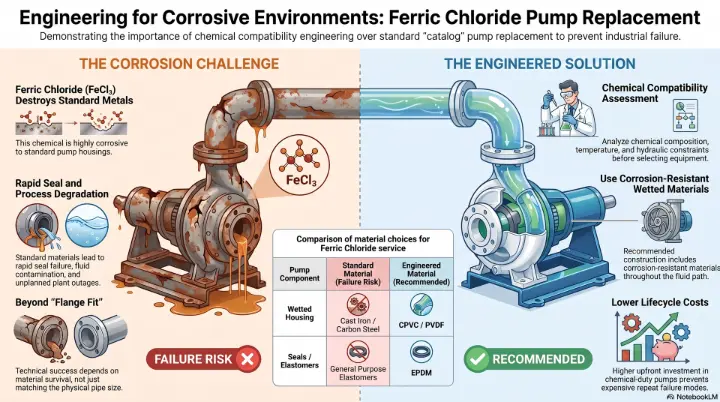
A wastewater treatment plant needed a replacement dewatering or chemical pump for ferric chloride (FeCl₃) service — a highly corrosive chemical widely used for phosphorus removal and odor control. A standard cast iron or general-purpose dewatering pump would begin degrading almost immediately in this service.
The Technical Challenge
The critical question wasn't "which pump fits the flange." It was: which materials can survive continuous contact with this chemical while meeting the hydraulic requirements?
Common pump materials like cast iron, carbon steel, and standard elastomers are attacked by ferric chloride, leading to corrosion failure of the pump housing, rapid seal degradation, contamination of the process fluid, and unplanned outages.
How RBC Industrial Solved It
RBC Industrial's team approached this from a chemical compatibility standpoint first — not a catalog search.
- Chemical assessment: Analyzed ferric chloride's material compatibility requirements
- Existing motor review: Confirmed mounting, power, and RPM constraints
- Alternative evaluation: Instead of quoting a standard pump, evaluated vertical chemical pumps and self-priming chemical transfer pumps with corrosion-resistant wetted materials
- Material selection: Recommended CPVC, PVDF, and EPDM construction throughout the fluid path
The Result
The customer received a technically appropriate pump recommendation based on chemical compatibility, installation style, motor requirements, and process conditions — instead of inheriting a repeat failure mode. The higher upfront investment in a chemical-duty pump was justified by dramatically lower lifecycle costs.
Need a pump for corrosive service? Contact RBC Industrial with your chemical composition, temperature, and flow requirements. We'll evaluate materials before we quote.