Reemplazo de motorreductor de emergencia: cómo lograr el ajuste correcto cuando los dibujos están incompletos
Un estudio de caso sobre orientación de medición y abastecimiento técnico
El problema
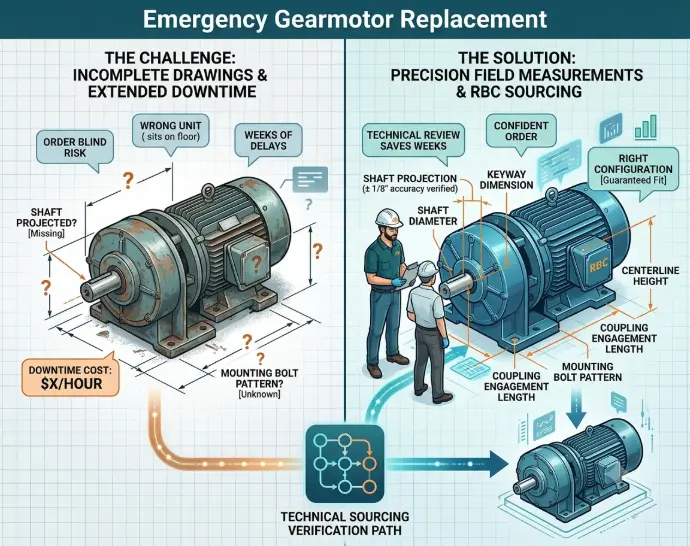
Un motorreductor crítico se averió en una planta industrial. Cada hora de inactividad cuesta dinero. El cliente necesitaba un reemplazo que se montara correctamente, coincidiera con la posición del eje y funcionara con la disposición del acoplamiento existente.
Simple, ¿verdad? Excepto que el dibujo del equipo original no incluía todas las dimensiones requeridas. La diferencia entre un motorreductor que encaja y uno que no puede ser tan solo 1/8 de pulgada en la proyección del eje. Haga un pedido a ciegas y correrá el riesgo de que una unidad costosa se quede en el suelo mientras la planta permanece abajo.
El desafío técnico
El reemplazo del motorreductor requiere precisión en varias dimensiones que las hojas de especificaciones estándar no siempre capturan: altura de la línea central de la caja de cambios, proyección del eje, diámetro y chavetero del eje, longitud de acoplamiento del acoplamiento y patrón de pernos de montaje. La falta de cualquiera de estos significaba que el reemplazo no encajaría.
Cómo lo resolvió RBC Industrial
- Revisión de la aplicación: Disposición del equipo comprendida, configuración de montaje y disposición del acoplamiento
- Guía de medición: acompañó al cliente en la toma de mediciones de campo críticas: línea central, proyección del eje, diámetro del eje, patrón de pernos
- Identificación de la ruta de reemplazo: Motorreductores disponibles con referencias cruzadas que coinciden con las dimensiones críticas
- Evaluación del acoplamiento: Se evaluó si el acoplamiento existente podría reutilizarse o si era necesario reemplazarlo
El resultado
El cliente recibió una ruta de reemplazo práctica que redujo la incertidumbre, evitó pedir la configuración incorrecta y ayudó a avanzar más rápido en la reparación. Unas pocas horas de revisión técnica ahorraron semanas de retrasos y miles de trabajos de emergencia.
¿Tiene una unidad crítica averiada y necesita un reemplazo rápido? Póngase en contacto con RBC Industrial. Envíenos fotos, datos de la placa de identificación y cualquier medida disponible; verificaremos el ajuste antes de realizar el pedido.