Buying Industrial Automation Parts from Surplus Websites: A Practical Guide
When an obsolete component fails or budgets tighten, purchasing industrial automation parts from surplus websites like eBay or specialized industrial asset liquidators often looks like the fastest path to a solution. And sometimes it is. But experienced engineers know that industrial procurement is ultimately an exercise in risk management — and the cheapest part can become the most expensive when downtime is on the line.
This guide covers when surplus makes sense, when it doesn't, and how to make the right call for your operation.
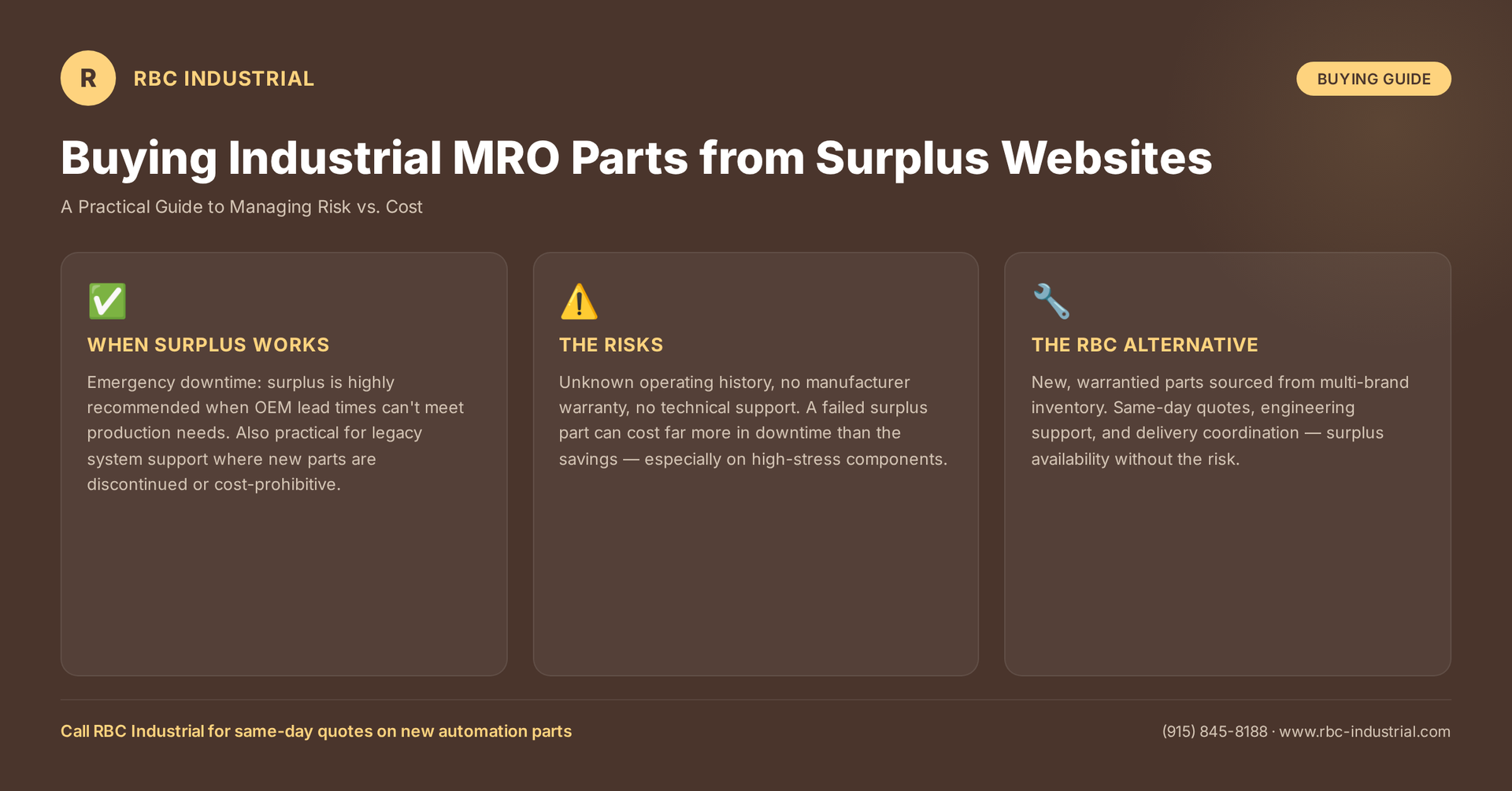
The Perks of Buying Surplus Automation Parts
Significant Cost Savings
Surplus parts can frequently be sourced at massive discounts — often up to 90% cheaper than brand-new, list-price alternatives. This frees up operational capital for other business areas.
Combating Obsolescence
As OEMs discontinue older product lines to make way for new technology, surplus sites become critical for sourcing identical legacy components without needing to expensively retrofit entire systems.
Rapid Availability
Lead times for new OEM parts can stretch into weeks or months. Surplus sellers generally have sitting inventory ready for immediate, express delivery.
Environmental Sustainability
Purchasing used or surplus inventory promotes a circular economy. It extends the lifecycle of automation components, reduces electronic waste, and aligns with ESG strategies.
The Downsides and Risks
Unknown Operating History
With second-hand components, it is often difficult to ascertain how long the part was used, the harshness of its operating environment, or whether it was properly maintained.
Lack of Manufacturer Support
Low-cost distributors and eBay sellers typically provide little to no technical consultation, engineering support, or post-installation troubleshooting. It is often a "buyer beware" situation.
Warranty Limitations
Standard manufacturer warranties usually do not apply to the secondary market. While reputable surplus dealers might offer a 3- to 6-month in-house guarantee, many independent online sellers offer no protection at all.
Hidden Costs of Failure
If a surplus part fails, the downtime can cost far more than the initial savings. Components like sensors, transducers, and switches experience constant mechanical stress and become early points of failure.
Sourcing Strategy: Emergency vs. Non-Emergency
The viability of surplus purchasing largely depends on the urgency of the situation and the critical nature of the application.
| Scenario | Is Surplus a Good Option? | Key Considerations |
|---|---|---|
| Emergency Downtime | Highly Recommended | When a production line is halted and OEM lead times are too long, surplus sites are vital. This is especially true in regulated industries where like-for-like replacements are mandatory. |
| Routine Upgrades & Maintenance | Requires Caution | For standard stock, consider the operational risk. Parts under high electrical/mechanical stress should ideally be purchased new to ensure long-term lifecycle support. |
| Legacy System Support | Often Necessary | If upgrading the entire system is cost-prohibitive, sourcing tested surplus parts from reputable liquidators is the most practical way to extend machinery lifespan. |
Final Recommendations for Buyers
1. Prioritize Based on Disruption, Not Cost
Evaluate components by how much disruption they will cause if they fail. Avoid using unverified surplus parts for the most critical, high-stress bottlenecks on the manufacturing floor.
2. Verify the Source
"Surplus" doesn't always mean "used." Many items are factory-new overstock. Look for specialized sellers who rigorously test their inventory and offer basic warranties over random third-party sellers.
3. Assess In-House Expertise
Buying direct from surplus sites requires your internal team to have the expertise to install, program, and troubleshoot the components without OEM assistance.
The Professional Alternative: RBC Industrial
When surplus is too risky and OEM lead times are too long, RBC Industrial offers a third path. We source new, warrantied automation components from our multi-brand inventory and supplier network — with same-day quotes, technical engineering support, and delivery coordination included. You get the availability of surplus with the reliability of OEM-backed parts, backed by an engineering team that understands your application.
Need a part fast but can't afford the risk? Call RBC Industrial. Same-day response. Engineer-backed. No surprises.