V-Belt vs. Synchronous Belt: Load, Speed, and Maintenance Tradeoffs
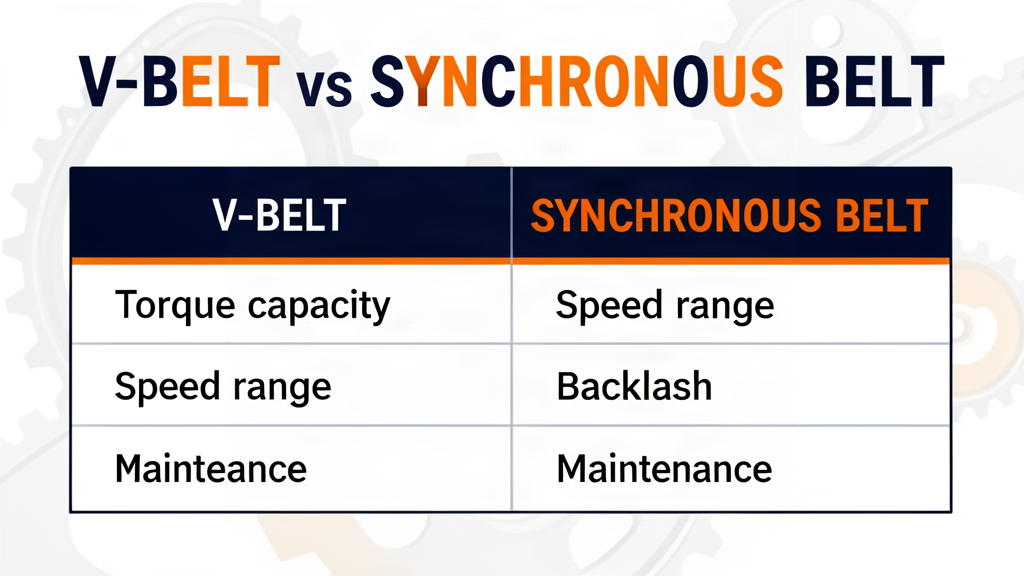
Choosing between a V-belt and a synchronous (timing) belt comes down to how much torque you need to move, how fast the drive runs, and how much maintenance you can tolerate.
V-Belts
V-belts transmit power through friction between the belt and the sheave. They tolerate moderate misalignment, absorb shock loads, and are inexpensive to replace. Because they rely on friction, they can slip under heavy shock loads and require periodic tensioning and re-tensioning.
Synchronous Belts
Synchronous belts use teeth that mesh with the sprocket, so they transmit power without slip. That gives them a fixed speed ratio, no backlash, and no need for re-tensioning. The tradeoff is less shock absorption and a higher sensitivity to misalignment.
How to Choose
- High torque, shock loads, or misalignment risk: V-belt.
- Fixed ratio, no slip, low maintenance: synchronous belt.
- High-speed, low-backlash positioning: synchronous belt.
RBC Industrial stocks both V-belts and synchronous belts across common industrial pitches and lengths, with engineer-led support to help you match the right belt to your drive.