
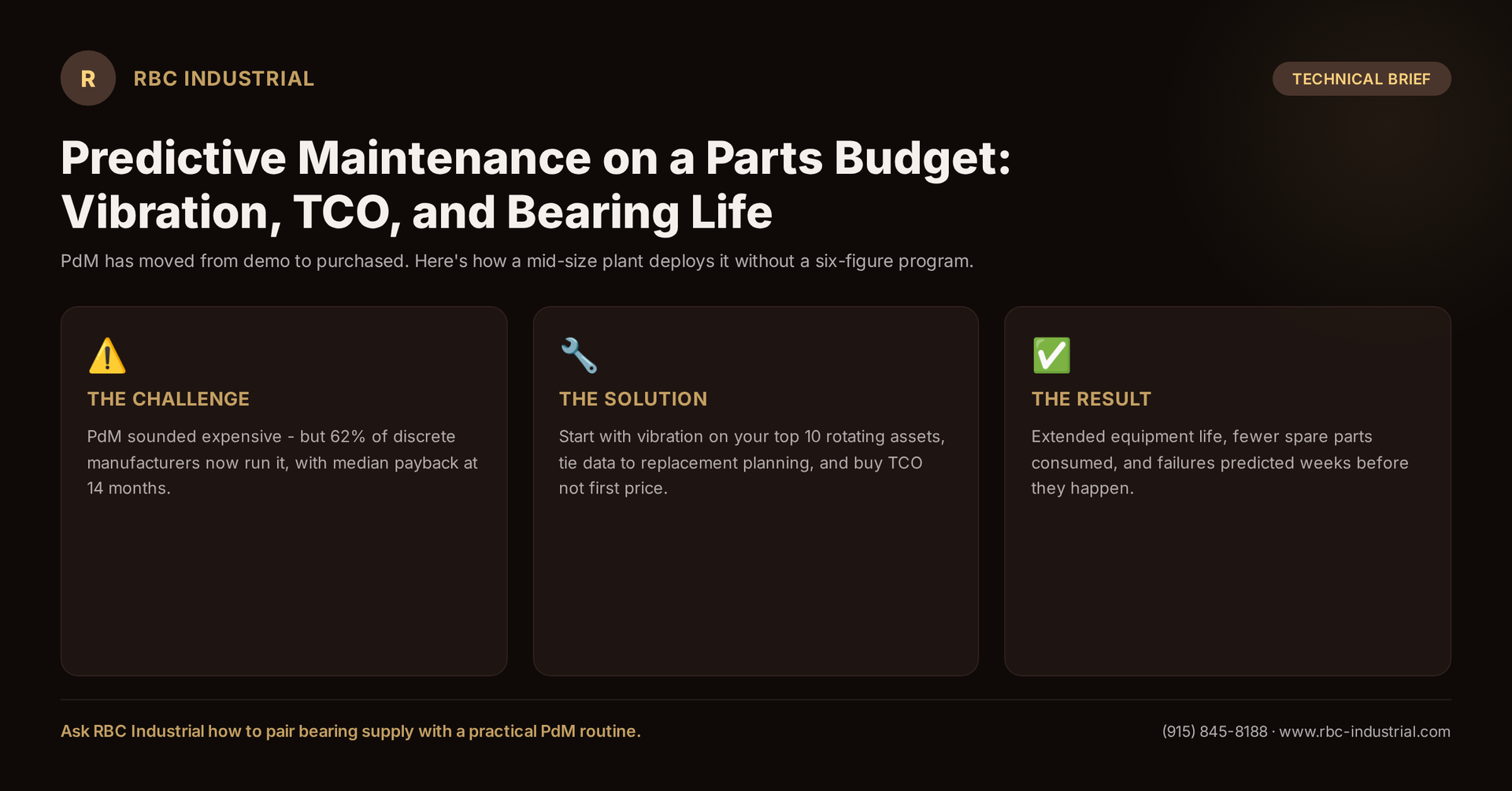
Predictive maintenance used to be a demo — something to show off at trade shows. In 2026 it is a purchased technology. According to the industry research from the week of August 17, 62% of discrete manufacturers now have at least one predictive maintenance deployment, and the median payback period is 14 months. That is not a distant enterprise story; it is a maintenance routine a mid-size plant can run on a parts budget.
Why it changed
Predictive maintenance is growing at a 4.57% CAGR, while preventive maintenance still holds the largest share at 46.51%. The shift matters because predictive catches failures during planned windows instead of forcing emergency response. GE's Asset Performance Management data shows predictive programs extend equipment life by about 11% and trim spare-parts consumption by about 8%. NIST research puts bearing failure prediction accuracy as high as 92% two weeks out — which is the difference between a scheduled replacement and an emergency teardown.
Starting small: the top-10 approach
You do not need a six-figure enterprise platform. The practical entry point is vibration monitoring on your ten most critical rotating assets — the spindles, gearboxes, pumps, and fans that would stop production if they failed.
1. Instrument the top tier. A handheld vibration meter run on a monthly route, or a small set of permanently mounted sensors on the highest-criticality machines, is enough to start. The goal is trend data, not instant diagnosis.
2. Tie the data to your replacement plan. When vibration trends cross the threshold, you have two weeks to order the bearing and schedule the swap. That converts your spare-parts stock from "insurance sitting on a shelf" into "scheduled replacement" — which is why predictive programs cut spare-parts consumption by roughly 8%.
3. Buy TCO, not first price. When the data says a bearing is failing, the cheapest replacement is not automatically the right one. The total cost of ownership case — bearing life, application fit, and the cost of the downtime you are avoiding — favors the right engineered bearing over the lowest first price. This is where a technical distributor earns its keep: matching the actual application to the correct bearing class, not just cross-referencing a number.
Combining PdM with lead-time reality
Predictive maintenance and the 5–7 week bearing lead-time baseline work together. Predictive tells you a failure is coming in about two weeks; lead-time reality says a standard replacement takes 5–7 weeks. That gap is exactly why a stocked strategic spare on your top-tier assets is not optional — it is the bridge between the prediction and the lead time.
RBC Industrial can help you build that bridge: identify the bearings on your critical rotating assets, stock the right spares, and source replacements with accurate lead times so your predictive program has parts ready when the data says it is time.
Contact RBC Industrial at (915) 845-8188 to pair your maintenance routine with a bearing supply plan that matches it.