
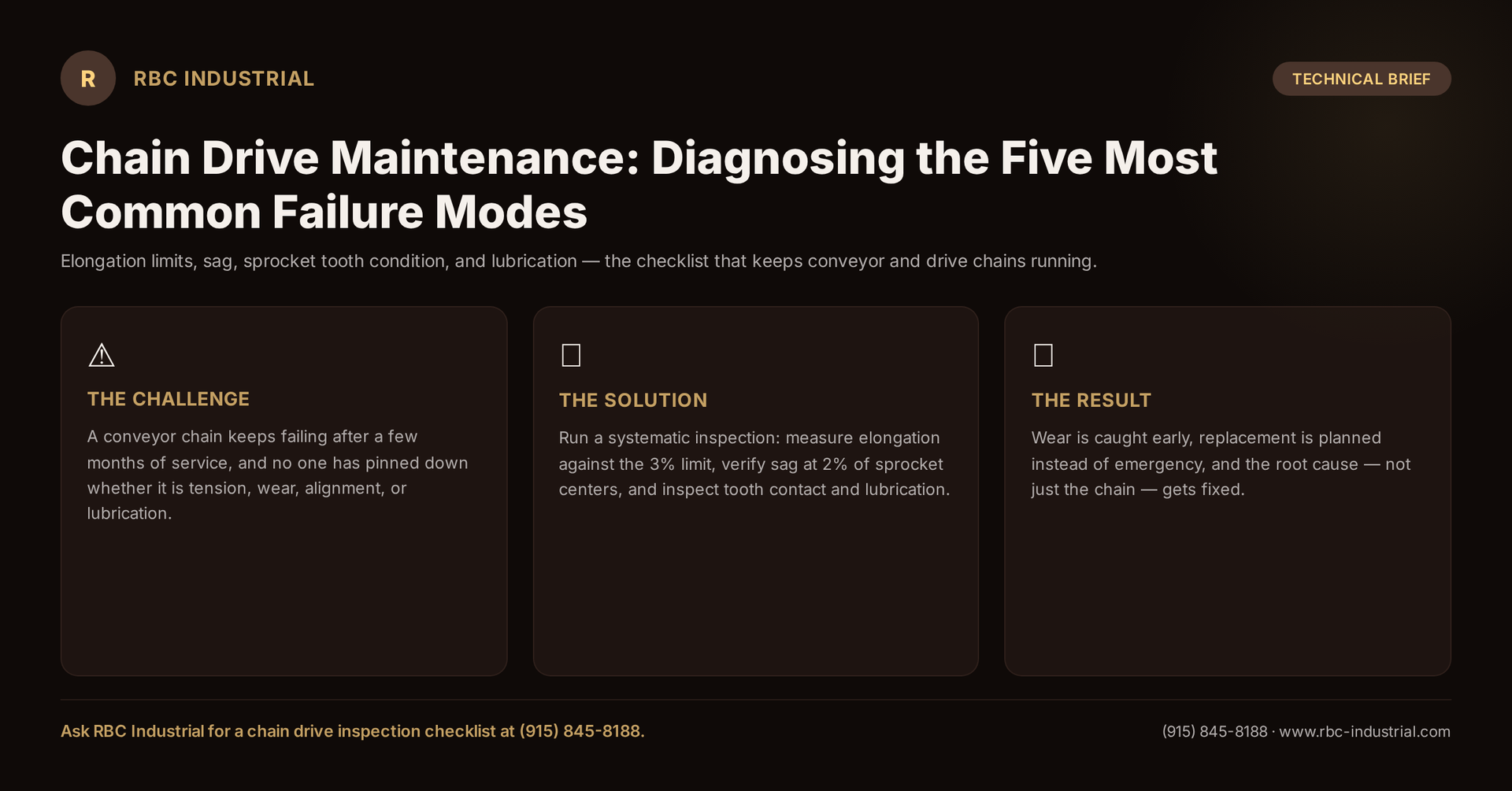
La falla de la cadena suele ser un problema de diagnóstico
Las transmisiones por cadena son indulgentes, hasta que dejan de serlo. Una cadena que sube por la rueda dentada, se adhiere a los dientes o lanza rodillos casi siempre le dice algo sobre tensión, desgaste, alineación o lubricación. La guía de mantenimiento y solución de problemas de Martin (la misma referencia que RBC Industrial utiliza para las llamadas de campo) divide el diagnóstico en un puñado de comprobaciones repetibles.
Compruebe primero el alargamiento
El desgaste de la cadena se muestra como alargamiento, y el alargamiento es medible. La regla publicada: si el alargamiento de la cadena supera el 3%, reemplace la cadena. Verifique la duración después de las primeras 1000 horas de funcionamiento, nuevamente después de otras 500 horas y periódicamente a partir de ese momento. Una cadena que se ha estirado más allá del límite no sólo se desgasta, sino que también desgasta las ruedas dentadas más rápidamente, porque el paso ya no coincide con la distancia entre dientes. Reemplace toda la cadena, no solo la sección visiblemente defectuosa, e inspeccione las ruedas dentadas en busca de desgaste de los dientes al mismo tiempo.
Establezca la tensión por hundimiento
La tensión se establece mediante el hundimiento, no mediante la sensación. La pauta general en el catálogo es hundimiento en pulgadas basado en el 2 % de los centros de las ruedas dentadas, lo que significa que una transmisión con 50 pulgadas entre los centros de las ruedas dentadas debe mostrar aproximadamente 1 pulgada de holgura en el espacio libre. Demasiada holgura permite que la cadena suba por la rueda dentada y golpee la carcasa. Una tensión demasiado baja sobrecarga la cadena y los cojinetes. Retensión, no adivines.
Observe las ruedas dentadas
El piñón pequeño es el punto débil. La guía del catálogo es diseñar para al menos 17 dientes en la rueda dentada pequeña donde la envoltura lo permita, porque menos dientes significan más tensión de articulación por eslabón. Si la cadena sube por la rueda dentada, verifique que no haya holgura excesiva, desgaste excesivo de la rueda dentada o muy pocos dientes en contacto. Si la cadena se aferra a la rueda dentada en lugar de soltarse, busque desgaste de la rueda dentada, desalineación o una obstrucción. Los tensores de cadena son una solución disponible cuando la envoltura es insuficiente.
Lubricación y medio ambiente
La lubricación inadecuada es la causa principal detrás de la mayoría de los modos de falla restantes. Una cadena oxidada significa exposición a humedad o agua en el lubricante; proteja la transmisión y cambie el lubricante. Los rodillos deformados o rotos indican una velocidad demasiado alta, ruedas dentadas demasiado pequeñas o una carga dinámica que supera la capacidad de la cadena. Si la cadena roza una carcasa o guía, reemplácela una vez que se haya desgastado el 5% o más de la altura del eslabón y luego elimine la interferencia. Los ambientes corrosivos requieren un plan de protección; La cadena de carbono simple no sobrevivirá indefinidamente en una atmósfera hostil.
Una secuencia práctica de campo
Cuando falla una transmisión, siga este orden: bloquee y etiquete la energía; medir el alargamiento; comprobar el hundimiento; examinar el contacto de los dientes en ambas ruedas dentadas; verificar la alineación; confirmar la lubricación. Esa secuencia detecta aproximadamente el 90 % de los problemas de transmisión por cadena antes de que se conviertan en reemplazos de emergencia.
RBC Industrial tiene existencias de cadenas, ruedas dentadas y tensores, y puede cotizar envíos el mismo día a través de la región fronteriza. Llame al (915) 845-8188 o visite www.rbc-industrial.com.