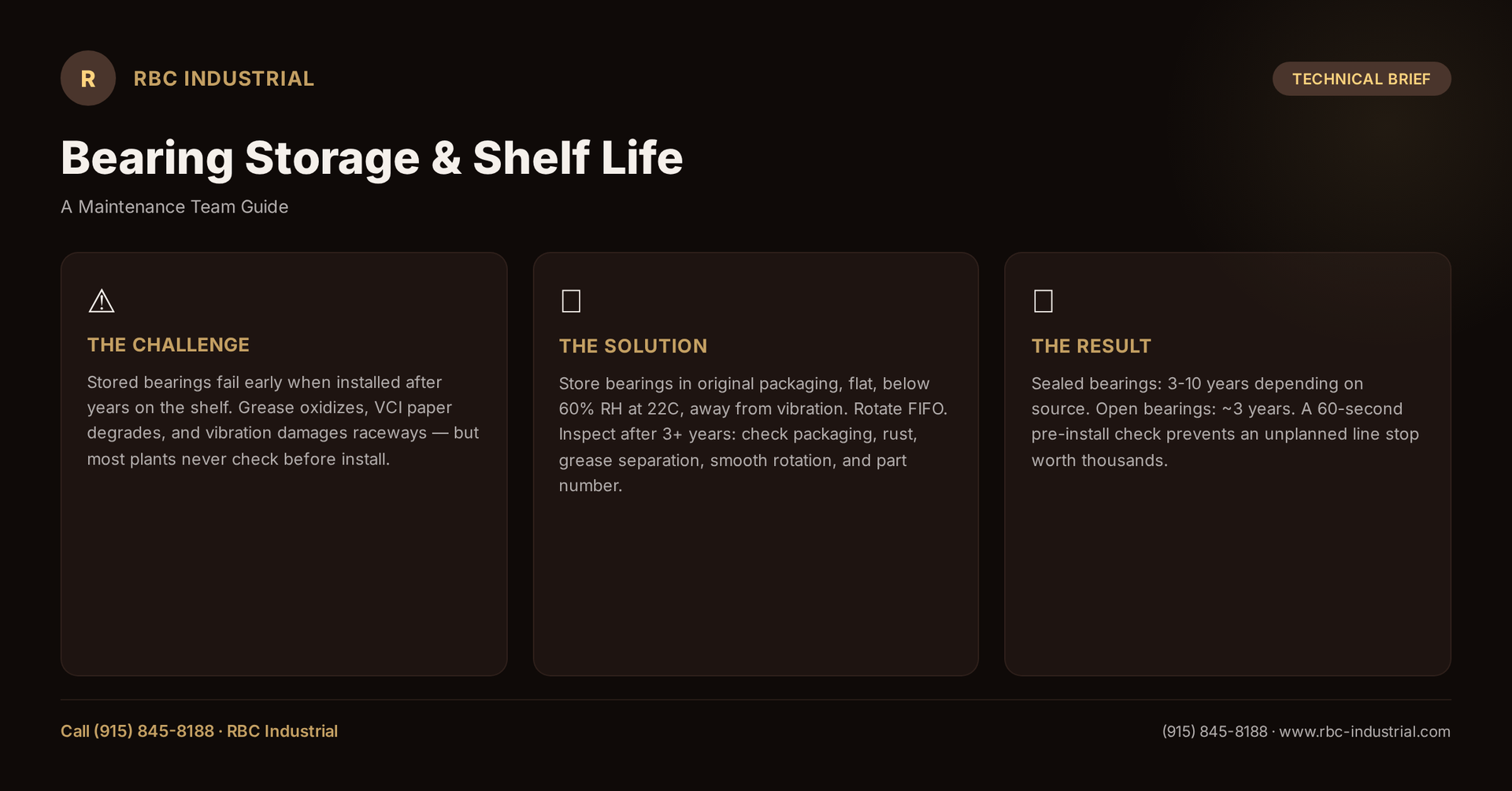
Almacenamiento del rodamiento y vida útil: lo que los equipos de mantenimiento deben saber
El tiempo de inactividad no planificado rara vez proviene de un rodamiento que se instaló ayer. Más a menudo, proviene de un rodamiento que permaneció en un almacén durante años y se instaló sin lugar a dudas. El almacenamiento de rodamientos es una verdadera disciplina de ingeniería, y hacerlo mal genera miles de pérdidas en fallas prematuras.
Esta guía cubre cuánto tiempo duran realmente los rodamientos almacenados, cómo almacenarlos correctamente y cómo saber si un rodamiento almacenado aún es seguro para instalar.
¿Cuánto tiempo duran los rodamientos almacenados?
La respuesta depende del tipo de rodamiento y su lubricación. No existe una vida útil única:
| Tipo de rodamiento | Vida útil | Factor limitante |
|---|---|---|
| Rodamientos abiertos (sin sellos ni protectores) | ~3 años | El recubrimiento conservante se degrada |
| Rodamientos sellados/protegidos | 3 a 10 años | Oxidación de la grasa: SKF recomienda un máximo de 3 años |
| Lubricadas con grasa | Hasta 3 años | Separación del espesante de aceite en la grasa |
| Lubricados con aceite | Hasta 10 años | Degradación más lenta que la grasa |
Nota sobre las fuentes: SKF es el más conservador (máximo de 3 años para rodamientos sellados). NSK y otros fabricantes citan entre 5 y 10 años en condiciones ideales. Para aplicaciones críticas, trate 3 años como el umbral seguro; para repuestos no críticos, 5 años es defendible si se verifican las condiciones de almacenamiento.
Condiciones correctas de almacenamiento
- Mantenga los rodamientos en su embalaje original. El envoltorio del fabricante, el papel VCI y el kraft engrasado están diseñados para proteger contra la corrosión y la contaminación. Nunca saque un rodamiento de su caja para exhibirlo.
- Almacenar en posición horizontal, no de lado. Los rodamientos almacenados de lado pueden deformarse por su propio peso durante períodos prolongados.
- Controla la temperatura y la humedad. Objetivo inferior al 60 % de humedad relativa a 22 °C (72 °F). Evite cambios de temperatura que provoquen condensación en el interior del embalaje.
- Manténgalo libre de vibraciones. Guárdelo lejos de compresores, prensas y carriles de tránsito de montacargas. El falso brinelling (daño por fricción debido a la microvibración) puede destruir un rodamiento en su caja.
- Rote las existencias FIFO. Los rodamientos más antiguos salen primero. Etiquete el stock entrante con la fecha de recepción.
- Inspeccione después de más de 3 años. Antes de la instalación, verifique si hay óxido, grasa descolorida o daños en el empaque.
¿Es seguro instalar ese rodamiento almacenado?
Antes de instalar cualquier rodamiento que haya estado almacenado durante más de un año, realice esta verificación:
- [ ] Embalaje intacto: no hay roturas, manchas ni gotas de humedad en el papel VCI
- [ ] No hay óxido visible en las pistas o rodillos expuestos
- [ ] La grasa (si está sellada) no se ha separado; no hay acumulación de aceite en el borde del sello
- [ ] El rodamiento gira suavemente sin sensación de arena ni puntos planos
- [ ] Número de pieza y código de fecha legibles: confirme que es el correcto especificaciones
- [ ] No hay evidencia de daño por vibración (falso brinelling) en las pistas de rodadura
Si el rodamiento no supera alguna verificación, no lo instale en equipos críticos. El costo de un rodamiento de reemplazo es trivial comparado con el costo de una parada de línea no programada.
Por qué esto es importante para su almacén
Un inventario de rodamientos bien administrado es una protección contra el tiempo de inactividad, pero sólo si los repuestos se pueden instalar cuando los necesite. Las plantas que tratan su plataforma de rodamientos como una caja negra rutinariamente descubren, en medio de una avería, que el "repuesto de emergencia" ha estado almacenado durante seis años en un almacén húmedo.
En RBC Industrial, nuestro stock de rodamientos rota continuamente: movemos más volumen, por lo que nuestros estantes contienen productos frescos, no piezas de museo. Y cuando necesita rápidamente un rodamiento especializado u obsoleto, nuestro equipo dirigido por ingenieros realiza referencias cruzadas entre marcas y redes excedentes para encontrar la pieza adecuada en horas, no semanas.
¿Necesita verificar una especificación de rodamiento o encontrar un tamaño difícil de encontrar? Llame a RBC Industrial al (915) 845-8188 o visite www.rbc-industrial.com.